Why the biggest challenge for the supply chain isn’t finding projects. It’s knowing what to do next.
Scotland’s electricity transmission network is undergoing its biggest transformation in generations. While the headlines focus on infrastructure investment, the real opportunity lies in understanding where projects are emerging, how markets are evolving and what that means for the organisations that support them.
In this article we explore why supply chain intelligence is becoming a competitive advantage in the UK’s energy transition.
A once-in-a-generation investment is already underway
If you’ve followed the UK’s energy transition over the past few years, you’ll have seen the headlines.
- Billions of pounds of investment.
- Thousands of kilometres of new transmission infrastructure.
- Offshore wind, hydrogen, battery storage and carbon capture projects accelerating at an unprecedented pace.
But while presenting at the Energy Transition Zone (ETZ) Build the Grid Masterclass in Aberdeen, it became clear that those headlines don’t fully capture what’s really happening.
This isn’t simply another infrastructure programme.
It’s one of the most significant transformations of Britain’s electricity network in generations.
And with that transformation comes an equally significant opportunity for the businesses that will design, build, supply and maintain it.
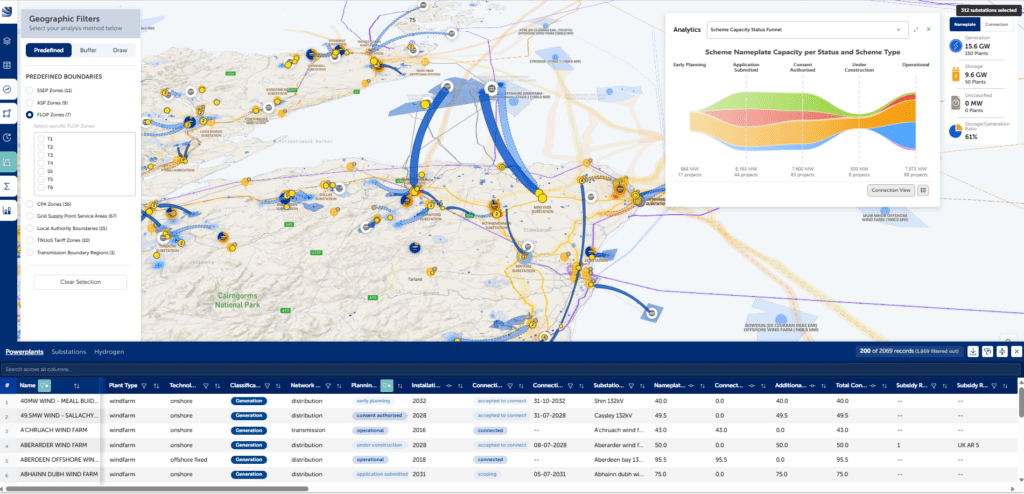
![Screenshot of taken from Olsights REACT platform showing the Heat map of future power generation (blue)/storage (orange) capacity [Image: REACT]](https://olsights.com/wp-content/uploads/2026/06/Scotlands-Biggest-Industrial-Opportunity.png)
Heat map of future power generation (blue)/storage (orange) capacity [Image: REACT]
The energy transition is already visible on the ground
Just outside Peterhead, one project perfectly illustrates what this transformation looks like in practice.
SSEN Transmission’s Netherton Hub has entered its main construction phase and will become one of the UK’s most strategically important electricity hubs. Bringing together new 400kV infrastructure alongside multiple HVDC converter stations, it will help connect offshore renewable generation into Great Britain’s electricity network.
During the Masterclass, one statistic immediately caught our attention.
The site is bigger than the Principality of Monaco.
Another highlighted the wider economic impact.
To support construction activity across the north-east, SSEN Transmission is helping enable around 1,000 new homes, creating a lasting legacy alongside the infrastructure itself. The project has already generated millions of pounds of spend with local suppliers while creating opportunities for apprentices, graduates and businesses throughout the regional supply chain.
Netherton Hub is just one example. Similar transmission investments are taking place across Scotland and the wider UK as the electricity network is reinforced to support offshore wind, electrification and net zero.
Projects like these remind us that the energy transition doesn’t happen in conference centres, strategy documents or PowerPoint presentations.
It happens:
- On construction sites.
- In fabrication yards.
- In engineering offices.
- In ports, warehouses and manufacturing facilities.
- Every one of these projects creates opportunity.
The challenge is understanding which opportunities matter most, and when to act.
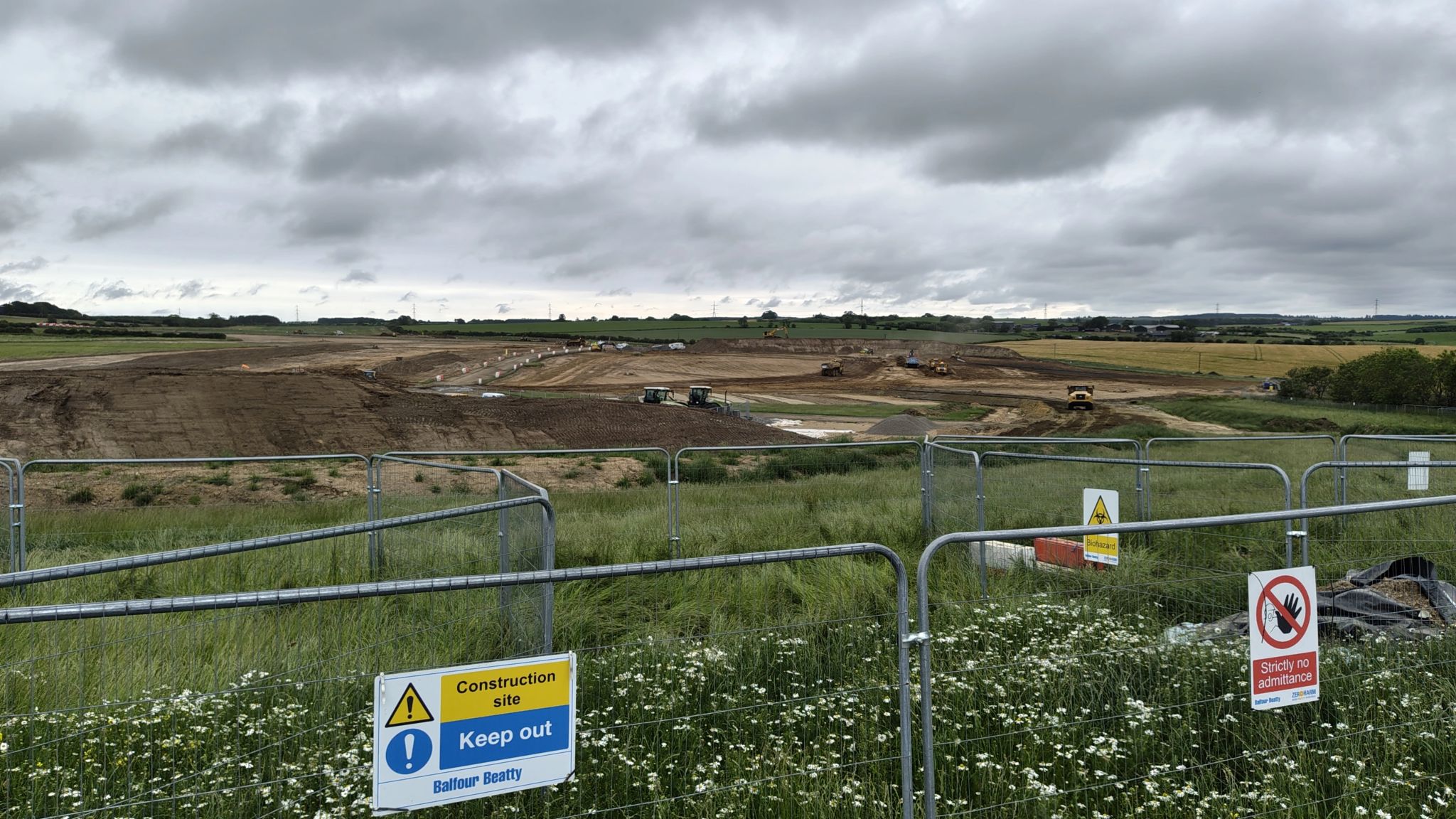
The Netherton Site on Friday 27th June 2026 (credit : Tony Griffiths)
Supply Chain Intelligence Starts with Better Decisions
One of the our messages is deliberately simple.
Most businesses don’t struggle to find projects. They struggle to decide what to do next.
Today’s supply chains have access to more information than ever before.
- Project databases.
- Planning portals.
- Developer announcements.
- Industry reports.
- Market intelligence.
- News articles.
Finding information is rarely the problem.
The real challenge is bringing those different sources together to answer the questions that matter most.
- Which projects are actually likely to progress?
- Which regions are building momentum?
- Where should we invest?
- Where should we recruit?
- Which developers should we build relationships with?
- Which opportunities deserve immediate attention?
Businesses don’t need more information.
They need greater clarity.
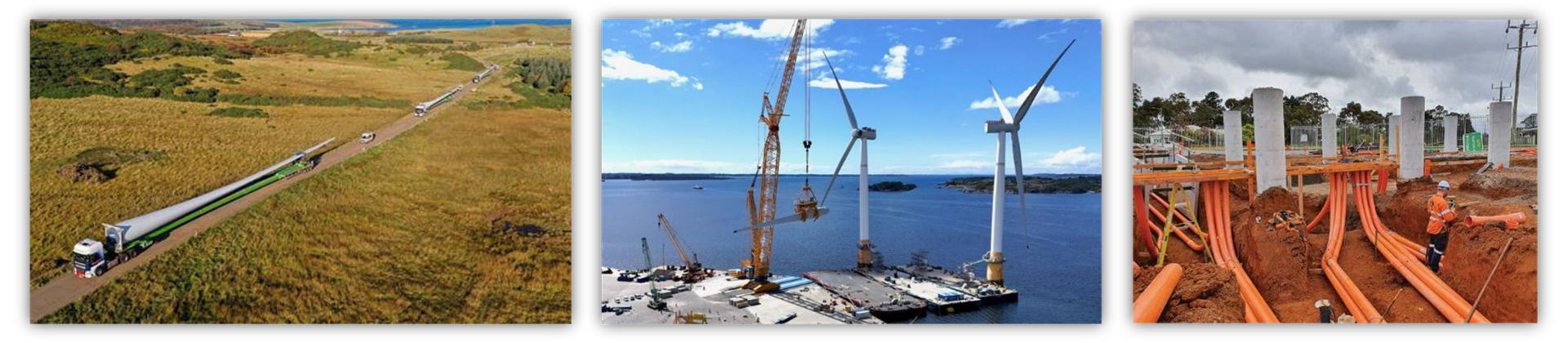
![Example project news story [ESS News] Power transmission project map [SSEN Transmission} Offshore wind project map [Crown Estate Scotland]](https://olsights.com/wp-content/uploads/2026/06/Good-Data.png)
Examples of good information available to organisations [Credit ESS News, SEN Transmission, Crown Estate Scotland]
Better Market Intelligence Creates Better Investment Decisions
Every strategic business decision carries risk.
- Should you expand into a new region?
- Develop new capability?
- Recruit specialist engineers?
- Invest in equipment?
- Partner with another organisation?
- Bid for a framework?
Those decisions become significantly easier when you can see how projects, infrastructure, markets and policy connect together.
Instead of asking:
“What projects exist?”
Businesses increasingly need to ask:
“Where is opportunity most likely to emerge next?”
That’s a fundamentally different question.
And it requires a different type of market intelligence.
REACT: Using Spatial Intelligence for Transmission Planning
This thinking has been shaped through our work with SSEN Transmission on the REACT Ofgem Strategic Innovation Fund (SIF) project.
The objective wasn’t simply to build another project database.
It was to create an interactive decision-support environment that helps network planners understand possible future scenarios by bringing together multiple datasets into a single view.
The project explored factors including:
- Network capacity
- Planning risk
- Connection competition
- Geographic constraints
- Future transmission investment
- Cumulative development
While REACT was developed for transmission planning, many of the lessons extend far beyond the network itself.
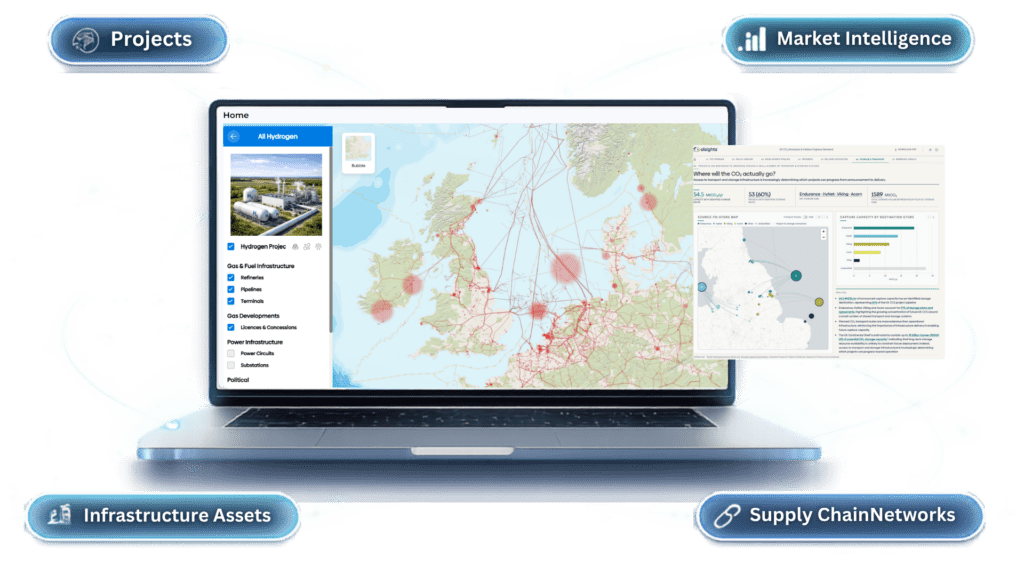
The same principles now underpin Olsights Eye, our interactive spatial intelligence platform, helping organisations visualise projects, infrastructure, markets and supply chains in one connected environment.
Whether you’re a network operator, developer or supply chain organisation, the questions remain remarkably similar.
- Where is demand emerging?
- Which projects are connected?
- What else is happening nearby?
- What opportunities does that create?
Understanding the Transmission Project Pipeline
Infrastructure projects aren’t static.
The opportunity evolves throughout the project lifecycle.
Early-stage developments create demand for planning, engineering and environmental consultancy.
As projects mature, the focus shifts towards civil engineering, manufacturing, logistics, installation and construction.
Later still, opportunities emerge around operations, maintenance and asset management.
Understanding where a project sits today—and where it’s heading next—is often more valuable than simply knowing it exists.
Netherton Hub demonstrates this perfectly.
Today’s activity is dominated by earthworks and civil construction.
Tomorrow, attention will increasingly move towards equipment suppliers, specialist contractors, commissioning teams and long-term operational support.
The opportunity evolves.
The intelligence supporting those decisions should evolve too.
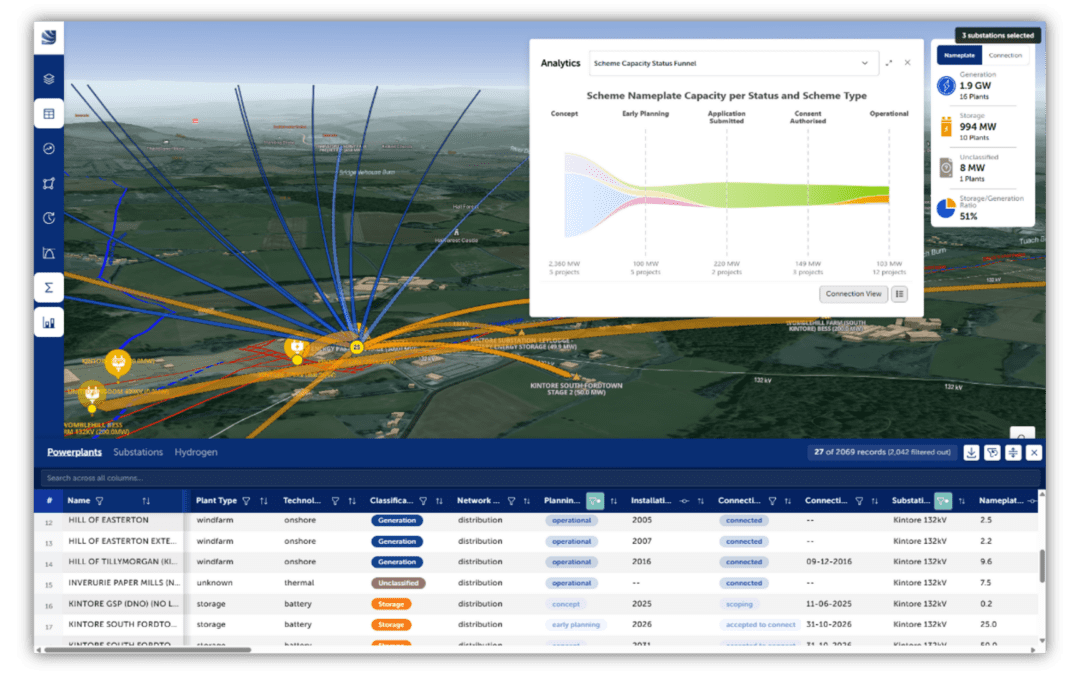
![Screenshot taken from the Olsights REACT platform showing Supply chain opportunity types associated with the project development pipeline [REACT]](https://olsights.com/wp-content/uploads/2026/06/Good-Data-2.png)
Supply chain opportunity types associated with the project development pipeline [REACT]
Opportunity doesn’t always follow a single path
Another important lesson we’ve learned is that infrastructure opportunity rarely exists in isolation.
- Transmission investment influences renewable generation.
- Renewable generation influences hydrogen.
- Grid constraints influence storage.
- Storage creates opportunities for flexibility.
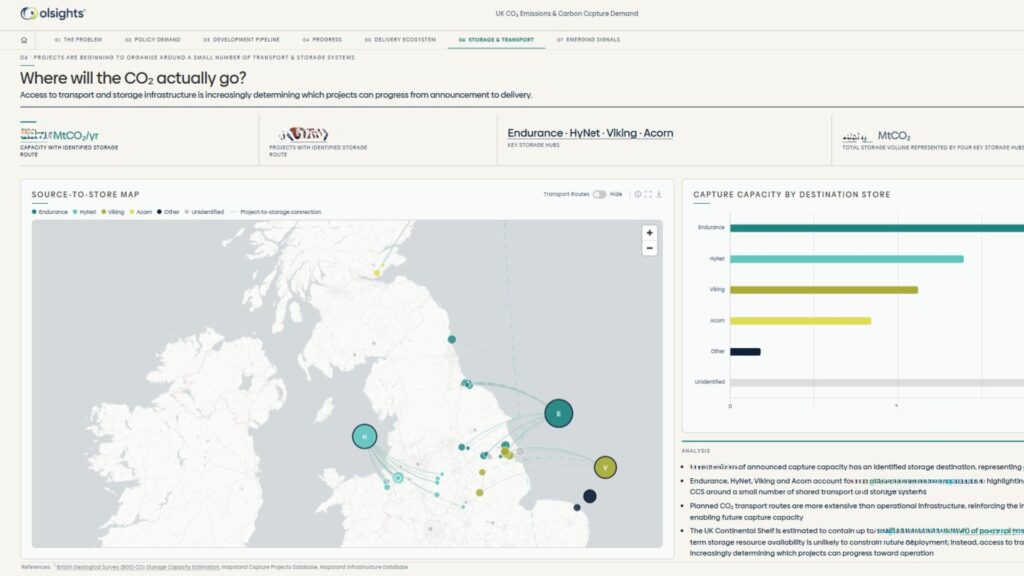
- Abundant renewable electricity can even create entirely new markets such as sustainable aviation fuel (SAF) and eFuels.
- The future energy system is interconnected.
Understanding one technology without understanding the wider ecosystem increasingly means missing part of the picture.
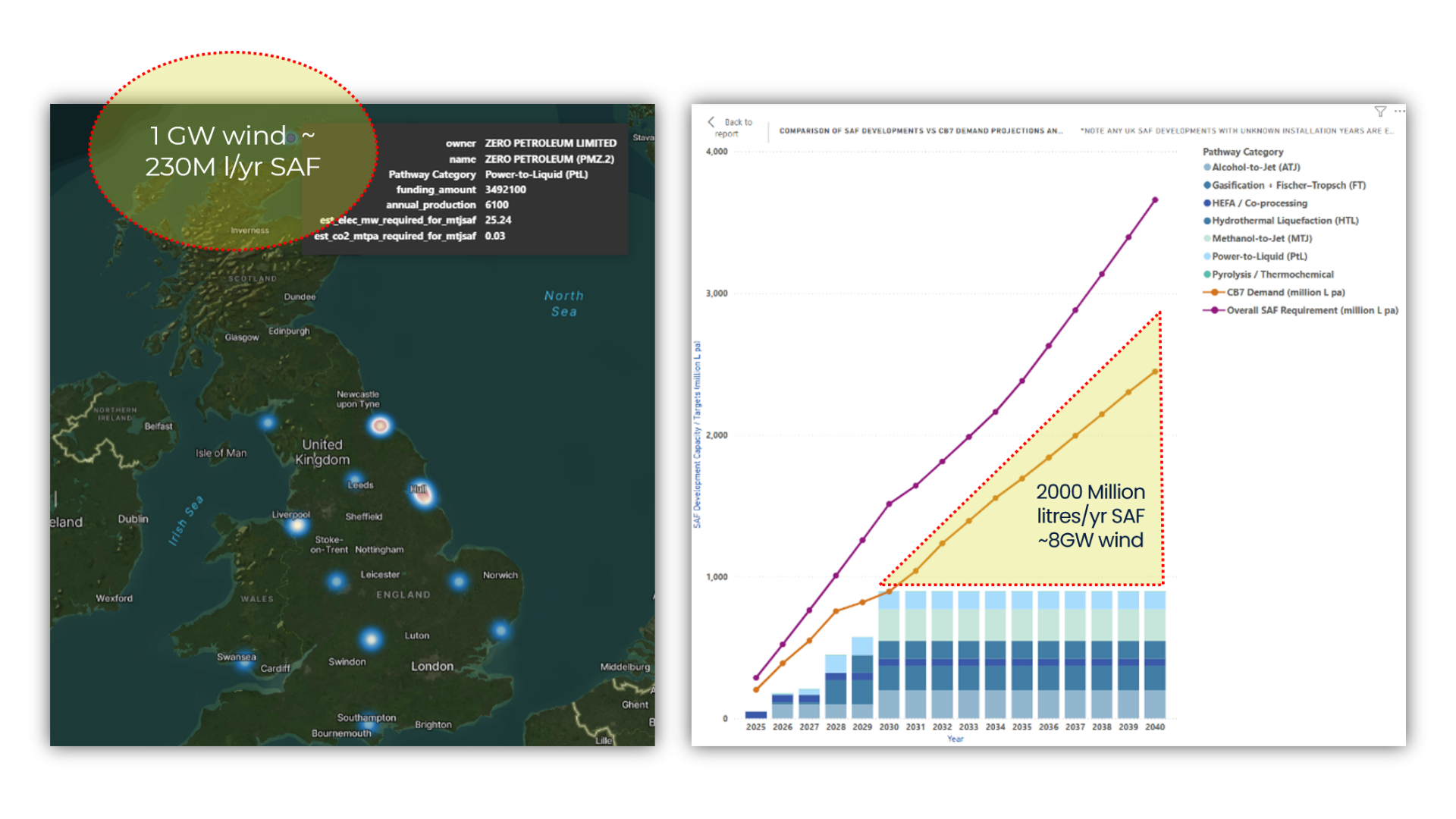
Only 1 ‘Advanced Fuels Fund’ dev in Scotland! Plenty of policy support to generate future Scottish SAF?
From information to confidence
At Olsights, we’re interested in a simple question.
How can better intelligence help organisations make better decisions?
Whether that’s through:
- Olsights Eye interactive spatial intelligence
- Tailored market intelligence reports
- Supply chain opportunity analysis
- Custom decision-support tools
- Long-term strategic partnerships
…the technology itself isn’t the objective.
Better decisions are.
Because in an industry changing this quickly, competitive advantage increasingly comes from understanding where opportunity is heading—not simply where it has already arrived.
We’d welcome your perspective
One of the final slides in the presentation wasn’t about Olsights.
It was about listening.
We’re actively looking to challenge our assumptions and learn from organisations across the supply chain.
We’d genuinely welcome your thoughts.
- How do you currently identify future opportunities?
- What information is hardest to find?
- Which decisions would better intelligence improve?
- What would help you make those decisions with greater confidence?
As transmission infrastructure investment accelerates across the UK, organisations that combine engineering expertise with better market intelligence will be best placed to identify opportunities early, prioritise investment and build long-term capability.
Whether you’re a contractor, manufacturer, consultant or technology provider, understanding how projects connect across regions and sectors will increasingly become a source of competitive advantage.
If you’d like to continue the conversation—or explore how Olsights could support your organisation—we’d be delighted to arrange a demonstration of Olsights Eye and discuss your challenges.
About this article
This article expands on the presentation delivered by Tony Griffiths, CEO & Technical Director at Olsights, during the Energy Transition Zone (ETZ) Build the Grid Masterclass in Aberdeen. We’d like to thank Jacqui Watt and the ETZ team for the opportunity to contribute to such an important discussion on the future of Scotland’s energy transition.
Download the slides from the Masterclass here.